Lesson 4: Food and Farming
Overview
The focus of this lesson is to consider the negative sustainability impacts of food production, and investigate solutions to these problems.
Learning Outcomes
By the end of this lesson, you should be able to:
- analyze the water footprint of various foods;
- describe how improper fertilizer management causes dead zones;
- define eutrophication;
- describe the sustainability implications of food deserts and food insecurity;
- demonstrate an understanding of permaculture philosophy and principles;
- describe regenerative agriculture and appropriate technology;
- analyze the sustainability impacts of community gardens; and
- explain the benefits of fair trade certification.
Lesson Roadmap
| To Read | Lesson 9 Online Content | You're here! |
|---|---|---|
| To Do |
|
|
Questions?
If you have any general course questions, please post them to our HAVE A QUESTION discussion forum located under the Discussions tab in Canvas. I will check that discussion forum regularly to respond as appropriate. While you are there, feel free to post your own responses and comments if you are able to help out a classmate. If you have a question but would like to remain anonymous to the other students, email me through Canvas.
If you have something related to the material that you'd like to share, feel free to post to the Coffee Shop forum, also under the Discussions tab in Canvas.
Food and Sustainability
Other than energy, it is through food that most of us most frequently directly interact with sustainability. Humans cannot survive without food, and most (and probably all) of you reading this eat multiple meals each day. The food industry has immense sustainability implications, including soil health and conservation, water use, forest clear-cutting, environmental and social justice, economics and equity, and much more. The following provides some insight into a few of these issues.
Water Use
You probably recall from a previous lesson that irrigation is the single biggest user of freshwater in the United States. You may also recall the large water footprint of some common foods. The following are footprints of common main dishes, according to the Water Footprint Network [1] (see Water Footprint report [2]). (Note that these are global averages. Also, 1 litre/kg equals about 0.12 gal/lb.):
- beef: 15,400 litre/kg (1,848 gal/lb)
- sheep: 10,400 litre/kg (1,248 gal/lb)
- pig: 6,000 litre/kg (720 gal/lb)
- chicken: 4,325 litre/kg (519 gal/lb)
- tofu: 2,517 litre/lb (302 gal/lb)
- rice: 2,497 litre/kg (300 gal/lb)
- pasta: 1,849 litre/kg (222 gal/lb)
If you are interested, the Huffington Post does a nice job of comparing the water footprint of common foods [3]. (They use Water Footprint Network data.)
Almost all of the water used in producing meat is the result of irrigating the crops that are used to feed the animals, and some irrigation methods are more efficient than others. (Oregon State University Cooperative Extension provides a good analysis of various irrigation techniques [4] if you are interested in learning more.)
Dead Zones
One sustainability impact that happens on more of a macro scale is something called a "dead zone." The National Oceanic and Atmospheric Administration (NOAA) explains dead zones [5] thus:
Less oxygen dissolved in the water is often referred to as a “dead zone” because most marine life either dies, or, if they are mobile such as fish, leave the area. Habitats that would normally be teeming with life become, essentially, biological deserts.
Hypoxic zones can occur naturally, but scientists are concerned about the areas created or enhanced by human activity. There are many physical, chemical, and biological factors that combine to create dead zones, but nutrient pollution is the primary cause of those zones created by humans. Excess nutrients that run off land or are piped as wastewater into rivers and coasts can stimulate an overgrowth of algae, which then sinks and decomposes in the water. The decomposition process consumes oxygen and depletes the supply available to healthy marine life.
Dead zones occur in many areas of the country, particularly along the East Coast, the Gulf of Mexico, and the Great Lakes, but there is no part of the country or the world that is immune. The second largest dead zone in the world is located in the U.S., in the northern Gulf of Mexico.
Dead zones happen all over the world and are in fact a natural occurrence. However, humans have significantly increased the incidence of dead zones, including the one in the Gulf of Mexico, which grows to about the size of New Jersey every summer, as you will see in the video below. These dead zones are caused by eutrophication, which is when a body of water has an excessive amount of nutrients (primarily nitrogen and phosphorous) that lead to unusually high plant/algae growth. (Note that eutrophication just refers to excess nutrients, but this often results in a dead zone.) When eutrophic streams and rivers empty into ponds, lakes, or other open bodies of water (such as the Gulf of Mexico), it causes excessive algae growth and ultimately leads to anoxic ("oxygen-less") conditions near the bottom of these bodies of water. NOAA does a good job of explaining eutrophication in the video below.
What is eutrophication? It’s a problem that should matter to you, whether you live near the ocean or not. That’s because it begins wherever people live and ends with damage to resources we all use and enjoy. It all starts when nutrients get into lakes and oceans. Remember, what’s waste to humans can be food to plants and other creatures. Nutrients feed algae like they do other plants. Algae grows and blocks sunlight. Plants die without sunlight. Eventually, the algae die too. Bacteria digest the dead plants, using up remaining oxygen, and giving off carbon dioxide. If they can’t swim away, fish and other wildlife become unhealthy or die without oxygen. But it doesn’t have to be this way. Protecting marine resources starts with sound agricultural and waste management practices.
Eutrophication has a few anthropogenic causes, but the primary one is the use of artificial fertilizers on farms. Fertilizers feed plants, but if they get into bodies of water they feed algae. The video below from NOAA provides a good explanation of this. Please note that the explanation at the end of the video of what causes the dead zone is incomplete: waste from organisms that eat the phytoplankton plays a role in the dead zone, but (as described in the video above) the main cause of dead zones is when bacteria eat the dead phytoplankton after they sink to the bottom.
Did you know that half of the oxygen that we breathe comes from tiny organisms that live in the ocean? It's true! These microscopic marine organisms, called phytoplankton, produce oxygen just like land plants. But phytoplankton are not plants, they are Protists, single celled organisms. They are so small that thousands of them can fit in a single drop of water. In order to study phytoplankton, scientists often use microscopes... or satellites.
From space we see Earth like this. But some satellites see Earth like this… a dance of rainbow colors. In this case, the colors represent the concentration of phytoplankton in the ocean: red is high concentration; blue is low concentration.
Phytoplankton depend on nutrients and proper temperature and light conditions to grow and reproduce. Coastal areas are extremely rich in nutrients, which have been washed off the land by rivers. Areas such as the open ocean have lower concentrations of phytoplankton because of the limited amount of nutrients there.
The mouth of the Mississippi River is a perfect example of how nutrient run-off creates plankton blooms. 41% of the United States drains into the Mississippi River and then out to the Gulf of Mexico. That's a total of 3.2 million square kilometers of land or about 600 million football fields. About 12 million people live in urban areas that border the Mississippi, and this area constantly discharges treated sewage into rivers. However, the majority of the land in the Mississippi Watershed is farmland. Each spring as farmers fertilize their lands preparing for crop season, rain washes fertilizer off the land and into streams and rivers. All of the urban and farm discharges include nutrients such as nitrogen and phosphorus that are very important for the growth of phytoplankton. Incredibly, about 1.7 million tons of these nutrients are dumped into the Gulf of Mexico every year.
Once the Gulf of Mexico receives this huge influx of nutrients, massive phytoplankton blooms occur. These blooms result in an area called the dead zone with such low oxygen concentrations that few organisms can survive there.
But if phytoplankton blooms produce oxygen, then why does a Dead Zone occur? For animals, such as microscopic zooplankton and fish, phytoplankton blooms are like an all-you-can-eat buffet. Small animals eat the phytoplankton, and are, in turn, eaten by bigger fish. All along, these animals are releasing waste, which falls to the bottom of the gulf. There lurk bacteria that decompose the waste, and in the process use up the oxygen, creating hypoxic conditions. The different densities of freshwater from the Mississippi and saltwater from the Gulf create barriers that prevent mixing between the surface and deep waters. Soon there is not enough oxygen for other organisms to use. The Dead Zone has arrived. But as summer turns to fall, winds helps stir up the water, allowing the layers to mix and replenish oxygen throughout the water. Eventually, the Gulf and its fish populations return to normal. Until next year...
Food Deserts
Over the past 10 - 15 years, food deserts have (slowly) become a more prominent issue. The following is a summary from the U.S. Centers for Disease Control [6] (emphasis added):
Food Desert
Food deserts are areas that lack access to affordable fruits, vegetables, whole grains, low-fat milk, and other foods that make up a full and healthy diet (1). Many Americans living in rural, minority, or low-income areas are subjected to food deserts and may be unable to access affordable, healthy foods, leaving their diets lacking essential nutrients.What's the Problem?
Rural, minority, and low income areas are often the sites of food deserts because they lack large, retail food markets and have a higher number of convenience stores, where healthy foods are less available (2). Studies have shown that food deserts can negatively affect health outcomes but more research must be done to show how that influence occurs. There appears to be a link between access to affordable nutritious foods and the eating of these foods, meaning less access may lead to less incorporation of healthy foods into the populations’ diets.Who's at Risk?
Because there is no standard definition of a food desert, estimates of how much of the population is affected vary by quite a bit. However, it’s safe to say that many Americans have limited access to affordable nutritious foods because they do not live near a supermarket or large grocery store. Transportation is specifically part of the USDA food desert definition. Only common theme among food desert definitions is that there is limited access.Can It Be Prevented?
Food deserts can be improved through several different types of efforts. Establishing a community garden where participants share in the maintenance and products of the garden and organizing local farmers markets are two efforts that community members themselves can do (3, 4). Local governments can improve local transportation like buses and metros to allow for easier access to established markets (5). They can also change zoning codes and offer economic or tax incentives to attract retailers with healthier food offerings to the area (6).The Bottom Line
Food deserts are a big problem for many Americans that may limit their ability to eat healthy and nutritious foods on a regular basis. However, there are a variety of ways that local governments and community members can both improve food access in their neighborhoods.Case Example
Maria is a 60-year-old woman living in a low-income area of St. Louis. As she’s gotten older, she hasn’t been able to get around as well and doesn’t have a car. She usually eats a lot of unhealthy and microwavable foods because the closest store to her apartment is the local convenience store around the corner. She wishes that she could eat better and begins talking to some of her neighbors and other families in the building to get their input. Maria and her next-door neighbor Sylvia organize all the residents in their building to establish a community garden on the roof of the building so that they will all have fresh fruits and vegetables to share.
As indicated above, there is no one definition of a food desert, but it is meant to indicate a lack of access to fresh foods. The U.S. Department of Agriculture (USDA) considers three ways to define a food desert [7]. (The number of people in the U.S. in each category as of 2017 are in parentheses.):
- "Low-income census tracts where a significant number (at least 500 people) or share (at least 33 percent) of the population is greater than ½ mile from the nearest supermarket, supercenter, or large grocery store for an urban area or greater than 10 miles for a rural area." (54.4 million, 17.7% of the population)
- "Low-income census tracts where a significant number (at least 500 people) or share (at least 33 percent) of the population is greater than 1.0 mile from the nearest supermarket, supercenter, or large grocery store for an urban area or greater than 10 miles for a rural area." (19 million, 6.2% of the population)
- "Low-income census tracts where a significant number (at least 500 people) or share (at least 33 percent) of the population is greater than 1.0 mile from the nearest supermarket, supercenter, or large grocery store for an urban area or greater than 20 miles for a rural area." (17.3 million, 5.6% of the population)
The USDA has created a Food Access Research Atlas (available here) [8], where you can explore food deserts across the U.S. Feel free to tool around with it. (You will have to explore it for this week's quiz.)
Food Insecurity
A topic closely related to food deserts is food insecurity. The USDA defines food insecurity [9] and very low food security as follows:
- Food insecurity: "Food-insecure households (those with low and very low food security) had difficulty at some time during the year providing enough food for all their members due to a lack of resources."
- Very low food security: "In this more severe range of food insecurity, the food intake of some household members was reduced and normal eating patterns were disrupted at times during the year due to limited resources."
The USDA provides an annual report and analysis on food insecurity in the U.S. through its Economic Research Service. Highlights (okay, lowlights) from the "Household Food Security in the United States 2017 [10]" report summary (full Household Food Security [11]report available here [11]) include:
- "An estimated 11.8 percent of U.S. households were food insecure in 2017, down from 2016 and continuing a decline from a high of 14.9 percent in 2011, while still above the pre-recession (2007) level of 11.1 percent"
- 11.8% of U.S. households were food insecure, which equates to 15.0 million households!
- 4.5% had very low food security, which equates to 5.8 million households.
- 2.9 million households with children (7.7% of all households) were food insecure.
- 250,000 households with children (0.7% of all households) had very low food security.
- "Rates of food insecurity were higher than the national average for the following groups: households with incomes near or below the Federal poverty line, all households with children and particularly households with children headed by single women or single men, women and men living alone, Black and Hispanic-headed households, and households in principal cities and nonmetropolitan areas."
Permaculture
What is Permaculture?
Permaculture is another one of those concepts that have no single definition, but I like the succinct definition offered by Geoff Lawton [12], one of the more well-known permaculture teachers and practitioners in the world when he stated that permaculture is "a system of design that provides all of the needs for humanity in a way that benefits the environment." Another way to describe it is "designing human systems to mimic natural systems" and "designing systems that work with nature instead of against it." No matter how you define it, it refers to a design system - it integrates concepts from a wide array of disciplines/topics (hydrology, soil science, biology, ecology, renewable energy, forestry, and more) - and utilizes them when designing systems, such as gardens, farms, houses, neighborhoods, and more. It is most commonly used to design food systems, though. Everything from a backyard garden to a large farm can be designed using these principles.
The concept and term "permaculture" was coined by Bill Mollison and David Holmgren in Australia in the 1970s. It was originally a concatenation of the terms "permanent agriculture" because it initially focused on food production systems, but came to be known as a shortened form of "permanent culture" because it can be used to address all aspects of human culture/settlements.
To Read Now
The Permaculture Research Institute provides an excellent one-page description of permaculture. Please read through it before continuing.
- "What is permaculture? [13]"
The following are some highlights from the reading:
- "Permaculture integrates land, resources, people and the environment through mutually beneficial synergies – imitating the no waste, closed loop systems seen in diverse natural systems." This should sound familiar! A well-designed permaculture system will have little/no waste, and may actually make the local natural environment better than it was before. As they indicate later on the page: "It is the harmonious integration of landscape and people — providing their food, energy, shelter, and other material and non-material needs in a sustainable way."
- Permaculture "is a multidisciplinary toolbox." It integrates many disciplines, as indicated above.
- "The philosophy behind permaculture is one of working with, rather than against, nature; of protracted and thoughtful observation...and allowing systems to demonstrate their own evolutions." Observation of how existing natural systems work is a key component of permaculture.
- "Recycling of nutrients and energy in nature is a function of many species. In our gardens, it is our own responsibility to return wastes (via compost or mulch) to the soil and plants, "but we rely on nature to replenish natural resources such as clean water and air, so "even anthropocentric people would be well-advised to pay close attention to, and to assist in, conservation of existing forests and to assist in the conservation of all existing species and allow them a place to live."
I want you to consider one additional concept that is mentioned in this summary. They mention that permaculture helps establish resilience. Resilience can be thought of as the ability to return to an original state after encountering a shock to the system. This has become a major focus of sustainability efforts. People recognize that "bad" things such as climate change, oil price spikes, and economic collapse will happen, but we do not know when. Much effort in sustainability design, thought, and policy is focused on establishing resilient communities (and cities, states, and countries) that will be able to withstand such shocks in such a way that suffering and distress will be minimized.
From a climate change perspective, this is primarily a focus on adaptation, i.e., adapting our communities to thrive in an uncertain climate future. This usually involves things such as using renewable energy (and not relying entirely on the national grid, e.g.), producing food locally (instead of relying on world markets), mitigating and/or avoiding flooding in low-lying areas, using more low-carbon transportation methods (e.g., bike and pedestrian infrastructure) and in general becoming more self-sufficient. This is a major focus of the Transition Town movement [14], but cities, towns, and states/provinces all over the world have engaged in planning for resiliency. For example, the state of Colorado has its own Resiliency Resource Center [15], which is operated out of the Department of Local Affairs.
The video below summarizes a lot of these concepts and adds a few others. It also provides a few examples of permaculture.
[ON SCREEN TEXT:] "If your food comes from the grocery store and your water from a tap you will defend to the death the system that brings these to you because your life depends on it...[but] If your food comes from a land base and if your water comes from a river you will defend to the death these systems." - Derrick Jensen
If you happen to pick up a newspaper these days, you'll probably find a growing sense of despair regarding climate change and environmental degradation, but there's been an astounding effort from countless communities to cull the rising tide of environmentally irresponsible actions. And among the surge of modern nature related groups and philosophies lies the promising ideas of permaculture which, when unpacked, provides us with a solid toolkit for not only tackling the difficult environmental challenges ahead, but also for thriving in a transformed world.
Permaculture, a term coined by Australians Bill Mollison and David Holmgren in their 1978 book Permaculture One, was originally a contraction of permanent and agriculture, but has since blossomed into a more inclusive combination of permanent and culture. As Mollison readily admits, permaculture is nebulous. "It's a little difficult to define what the permaculture community is." But those two words permanent and culture hit at the philosophy behind permaculture in the sense that it gives people a set of tools to rethink and redesign their communities so that they can live seamlessly with the natural world. And by working with, rather than against, nature in order to grow food, for example, permaculture bolsters not only the health of the land but also its practitioners. In doing so, the concepts and practices of permaculture build communities that are adaptable to a changing climate.
Jono Neiger sums up these ideas in his book Permaculture Promise wherein he writes,“Permaculture is about rebuilding much needed relationships with the people, land and systems that support us.” Through these relationships and a positive approach to change, agriculture seeks to build resilient cultures and communities. At the core of permaculture teaching lies three ethics: earth care, people care, and fair share. While earth care and people care at their simplest forms are the concerted efforts to nurture natural environments and surrounding communities in your everyday actions, fair share is a bit less self-explanatory. The concept of fair share is essentially the synthesis of earth and people care. It acknowledges that there is one earth that we all need to live on. So surplus, whether that's food, money, or time should be shared with those who are otherwise languishing or be returned back to the earth. These three ethics ultimately intertwine to create an effective moral base on which permaculture practitioners can build and transform their local systems. They're essentially guideposts for tangible change.
In practice, permaculture can take a variety of shapes. For instance Jordan Osmond over at Happen films toured Purple Pear farm, an excellent example of permaculture at work wherein each natural system feeds off each other, thus creating both abundant food for the farmer and a healthier ecosystem. But permaculture can also mean projects like City Repair in Portland which applies permaculture principles to artistic and ecologically minded projects that help reinvigorate local community relationships and the natural world.
Now more than ever, permaculture is important because it brings to the table tangible and ethically based solutions for systemic change. It moves beyond sustainability and into resilience. Looking towards not only surviving, but thriving in a quickly changing natural world. Starting at a local and personal level, the concepts of permaculture work to wean people off an industrialized and consumption centric worldview and replace that materialistic perspective with a new outlook that emphasizes ethical interactions with nature and a community-oriented lifestyle.
Ultimately, this new worldview brings us closer to appreciating the source of our sustenance and our desire for interpersonal connection. And if we can rekindle this understanding that we need thriving natural systems to live, as Derrick Jensen said so perfectly at the beginning of this video, we will then defend those natural systems to the death.
This video is made possible in part by the wonderful people who support me on Patreon. If you're interested in helping me grow this channel, head on over to Patreon and pledge a small amount of money for every video I release. In return, I'll send you gifts like a handwritten thank you note or an Our Changing Climate sticker. As always if you like what you just saw share it around and subscribe. Thanks so much for watching and I'll see you next Friday.
Most of this reiterates much of what is written above, but there are a few more things I'd like to point out:
- First, I think the quote from Derrick Jensen provides important perspective: "If your food comes from the grocery store and your water from a tap you will defend to the death the system that brings these to you because your life depends on it...[but] If your food comes from a land base and if your water comes from a river you will defend to the death these systems." This speaks to one of the problems with our modern food (and consumer) system. Namely, that we are disconnected from the sources of our food (and other products). One negative impact of this is that it allows all of the hidden impacts that have been detailed throughout this course and EM SC 240N, such as water footprint, carbon footprint, ecological footprint, and social/environmental injustice to occur. If we were able to see the true negative impacts of these systems, it is more likely that we would address these problems. Permaculture is one way of many to reconnect us to the sources of our food and other products.
- He mentions that building "resilient cultures and communities" is at the core of permaculture. Again, resilience is a very important topic in sustainability.
- There are three ethics of permaculture, which you will see quoted a lot in permaculture literature. These are meant to underlie all permaculture systems:
- Earth care, which refers to attempting to eliminate negative impacts on the natural environment, or if possible, to actually helping regenerate natural systems.
- People care, which refers to doing everything we can to help as many people as possible.
- Fair share, which refers to always keeping in mind to "share the surplus," whether it be food, money, time, expertise, etc.
- He shows an example of a permaculture farm "where each natural system feeds off each other, thus creating both abundant food for the farmer and a healthier ecosystem." There are examples of this all over the world, but almost all of them share in common the idea that the whole farm/garden should work together as a system and actually improve the local ecosystem, for example by attracting beneficial insects, providing habitat for birds and other animals, and rebuilding soil.
- He also describes an example of more urban-focused permaculture "which applies permaculture principles to artistic and ecologically-minded projects that help reinvigorate local community relationships and the natural world." Permaculture principles will be described in more detail below.
- He notes that permaculture "brings to the table tangible and ethically based solutions for systemic change" and that it seeks to design systems that allow people not only to "survive" but to "thrive." Permaculture focuses on understanding the nature of many sustainability problems, but more importantly on ways to apply practical solutions to these problems. Permaculturalists are "doers" - it is a very solutions-focused, action-oriented concept. Permaculturalists like to discuss things, but they are usually more focused on doing things!
- He also mentions that permaculture seeks to "replace that materialistic perspective with a new outlook that emphasizes ethical interactions with nature and a community-oriented lifestyle." Permaculture is a holistic philosophy that seeks systemic change. Like some of the other content you have seen (e.g., circular economy), they recognize that our systems are not designed properly. Permaculture is also very community-oriented, and in fact, interacting with diverse people and ideas is one of the core principles of permaculture.
Permaculture Design Principles
Hopefully, by now you have a solid understanding of what permaculture is, as well as its core ethics. Permaculture also has a set of 12 principles that should be used to guide all design decisions. The video below from Oregon State University provides a good overview of these principles, and examples of how they can be applied. You will not be expected to memorize them, but it will be helpful to have a general understanding of each.
We’re arrived at the final element of the Permaculture Decision Making Matrix, the Permaculture design principles. Here are my two favorite books, which are the source of the principles. Bill Mollison included a comprehensive list of principles in the Permaculture Designer’s Manual, and later on David Holmgren consolidated and repackaged the principles into 12 in his book, “Permaculture Principles and Pathways beyond sustainability.” So for simplicity’s sake, I’ll present to you Holmgren’s 12 principles.
Principle 1 is “Observe and Interact,” and this is essentially what we’ve been talking about for this entire course thus far. Where am I? What are the forces present on my site that I need to design for? Climate, topography, water, soils, vegetation, wildlife, wind, fire, people, these are some of the elements that are part of our observations.
Principle 2 is “Catch and Store Energy.” Energy is not just electricity, but stored water represents potential energy in the form of irrigation water for future crops. The biomass of a forest represents a living storage of building materials, fuel, nutrients and water. Alternative energy systems can turn wind, sun, and flowing water into electrical energy. So this principle gives us the directive to capture and grow surpluses in our system.
Principle 3 is “Obtain a Yield.” This principle promotes self-reliance and gives us the directive to reap a harvest from our Permaculture system, because you can’t work on an empty stomach. This principle is relevant when making a choice about which tree to plant in a location. Always choose the one with greater and more diverse yields over an ornamental plant. Yields are not just food. Yields can be building materials, fuel wood, nectar for honey. But plenty of food growing all around you is true security.
Principle 4 is “Apply Self-Regulation and Accept Feedback.” This principle directs us to live simply and consciously, limit our own consumption, because no one else is going to do that for us. We need to keep our own consumption and emissions in check because that is our responsibility when we care for Earth and care for people. Accepting feedback means that learning from our successes and mistakes is an imperative, and should lead to better choices as we learn what works and what doesn’t.
Principle 5 is “Use and Value Renewable Resources.” Renewable resources are those which replenish with modest use. This could be sustainable forestry or fishing practices. This could mean planting an orchard downslope from a forest to take advantage of the nutrient and water drift that continually moves down the hill. This is the wind. This is the fact that plants and animals breed, and if we are responsible and careful, many of these resources can provide in perpetuity.
Principle 6 is “Produce No Waste.” This is where we make the waste of one part of our system the food for another. This means we compost, clean and recycle greywater, repair and repurpose broken tools and equipment. Reduce, reuse, repair, recycle. This also means we don’t waste people by having them do hazardous and meaningless work.
Principle 7 is “Design From Patterns to Details.” This is one of my personal favorites. It means that first we study the climate, topography, watershed, ecology, and we get a big picture vision of how we can interact with the land and community in a regenerative way, and then our design decisions are based on that. So this road I just drew in is placed in a way where it harvests the water for this pond. The detail of road placement was based on the overall pattern of water flow in the landscape.
Principle 8 is “Integrate Rather Than Segregate.” This principle says that the more relationships between parts of your systems, the stronger, more productive and more resilient your system becomes. This has to do with community as well. I drew a cluster of dwellings where a cooperative community can get much more done than an individual. Many hands make light work.
Principle 9 is “Use Small and Slow Solutions.” I’ve gone ahead and harvested some of the trees on the forest edge to use for fence posts and replaced them with nut trees that will start bearing in about 10-12 years, and will then live for hundreds of years. I’ve planted new trees over here, which will be new fence posts when these ones rot. I’ve also inoculated edible mushrooms into the stumps of the trees I cut, which will produce for years and then spread to others with the fallen wood. These are all examples of playing the long game, using the small and slow design principle.
Principle 10 is “Use and Value Diversity.” You can see we’ve got housing, gardens, wind power, water storage, composting, greywater, forestry, orchards, and now I’ve added in rotational grazing of animals, both here and in the orchard. I’ve also added more trees and gardens around the homestead, and fish to the pond. Diversity is one of the key aspects of Permaculture. We want to conserve diverse native habitats, and make our human habitats rich with an abundance of many productive elements. Diversity is also resilience: if one part of our system fails, there are others that will thrive.
Principle 11 is “Use Edges and Value the Marginal.” I’ve added edible hedgerows around the animal paddocks, and along the road. I’ve also added bamboo down below the pond, which will be sub-irrigated by water that seeps down. The edges and margins are great locations to add more productive species or habitat zones. And I can use them to create further layers of productivity.
Principle 12 is “Creatively Use and Respond to Change.” I noticed that with the orchards and hedgerows growing in, the forest soils growing spongier from mushroom inoculation, and the soils building from the animal rotation, water has begun to move much more slowly down the hillside. So much so, that this area at the bottom of the hill is becoming somewhat of a marsh. Well, that wasn’t what I planned, but I’m going to creatively use that change, and I’m going to carve out some low areas that’ll stay really wet, which I can use to grow edible wetland plants, and then simultaneously build up these peninsulas, full of edge to grow productive trees which will get their roots down in this water table. Wow, I didn’t even see that yield coming, but there you have it. The Permaculture principles in action!
Permacultureprinciples.com provides an excellent in-depth explanation [16] of each of these principles and also provides a ton of examples of each principle. If you want to explore any of the principles more (this is optional but strongly suggested if/when you have some time), including examples of concrete applications, click on the links to each item below. They even have a song for each principle, which is a nice touch! All quotes are taken from the permacultureprinciples.com site.
- Observe and interact [17]: "By taking the time to engage with nature we can design solutions that suit our particular situation." The most essential step before designing any system is to first observe. You should always seek to utilize immediate resources, e.g., when planning a garden, observe where the sunlight is at certain times, where the wet areas are, where the wind blows through, etc.
- Catch and store energy [18]: "By developing systems that collect resources when they are abundant, we can use them in times of need." Capturing rainwater and utilizing naturally produced fertilizer and mulch are some examples of this.
- Obtain a yield [19]: "Ensure that you are getting truly useful rewards as part of the work that you are doing." Permaculture systems should be productive, e.g., a garden that produces an abundance of food.
- Apply self-regulation and accept feedback [20]: "We need to discourage inappropriate activity to ensure that systems can continue to function well." This goes with observation, but after you have deployed a system, you should ALWAYS look for feedback from the local environment, and adjust accordingly to optimize the system, e.g., if you design a park in a city, but find that people are not using it because it is difficult to get to, think about finding ways to get people there (e.g., a bike path or bus route) or repurpose it (e.g., an urban farm). An important corollary of this is turning problems into solutions, e.g., if you are designing a garden and there is a wet area, grow plants that like a lot of water or divert the water to a drier area.
- Use and value renewable resources and services [21]: "Make the best use of nature’s abundance to reduce our consumptive behaviour and dependence on non-renewable resources." Use renewable resources at a sustainable rate!
- Produce no waste [22]: "By valuing and making use of all the resources that are available to us, nothing goes to waste." Remember, we should design systems like nature does. There is no waste in nature! Waste should be used as a resource, e.g., in a food system you should reintegrate unused organic material into the soil through composting. This goes along with turning problems into solutions.
- Design from patterns to details [23]: "By stepping back, we can observe patterns in nature and society. These can form the backbone of our designs, with the details filled in as we go." Permaculturalists use a lot of natural designs as the basis for intentional design, e.g., by using natural materials and shapes when designing buildings.
- Integrate rather than segregate [24]: "By putting the right things in the right place, relationships develop between them and they support each other." Permaculture focuses on relationships and connections, always looking at the system as a whole. An important corollary of this is to have single things serve multiple functions, e.g., permaculture gardens often use chickens because they provide food, they aerate the soil by scratching it, they eat pests that can destroy crops, and they provide natural fertilizer through manure. Bicycling is another example - it provides exercise, reduces emissions, and allows for more personal connections with the local community.
- Use small and slow solutions [25]: "Small and slow systems are easier to maintain than big ones, making better use of local resources and producing more sustainable outcomes." Think in terms of years and decades when making designs, not weeks or months.
- Use and value diversity [26]: "Diversity reduces vulnerability to a variety of threats and takes advantage of the unique nature of the environment in which it resides." Diverse systems are more resilient, e.g., if you have a biodiverse field or farm and one crop/plant is destroyed by a pest, there are other species remaining to provide resources.
- Use edges and value the marginal [27]: "The interface between things is where the most interesting events take place. These are often the most valuable, diverse and productive elements in the system." This goes hand-in-hand with the previous principle. Diverse systems are more innovative, e.g., a group of people with a diverse set of skills is more creative, and can more easily adapt to a variety of problems.
- Creatively use and respond to change [28]: "We can have a positive impact on inevitable change by carefully observing, and then intervening at the right time." Again, you should constantly observe and adjust.
One other thing that I'd like to note before moving on is that while remembering and applying these principles takes a lot of effort, a properly designed permaculture system significantly minimizes effort once it is established! For example, a well-designed permaculture garden will require almost no active watering (it should be rain-fed), does not require the constant addition of fertilizers (it should be mostly self-sufficient), does not need pesticides (most pests should be eliminated by beneficial insects, chickens, or other natural biological solutions, and things like proper air flow and sunlight), and it minimizes replanting (true permaculture uses mostly perennials, not annual plants). A properly designed urban environment will optimize the use of local resources such as renewable energy, local food sources, and low-impact transportation. Such an urban system should also provide resources to help all people thrive, thus minimizing the need for social services.
Permaculture Summary
Please note that people spend their whole lives researching and applying permaculture - we are only scratching the surface! But hopefully, you have a reasonably good understanding of what permaculture is and how it can be applied. The following is a brief summary of some key points:
- Permaculture can be thought of as "a system of design that provides all of the needs for humanity in a way that benefits the environment." Another way to describe it is "designing human systems to mimic natural systems" and "designing systems that work with nature instead of against it."
- Permaculture integrates a number of disciplines together to apply practical solutions to sustainability problems. It effectively integrates all of the sustainability concepts that we've encountered in this course and EM SC 240N.
- Resiliency is the ability to maintain one's essential identity/character when encountering a shock to the system. It is a major focus of permaculture, and modern sustainability studies, in particular with regards to climate change. Transition towns focus on resilience and have been established all over the world.
- Permaculture focuses mostly on practical, local solutions and seeks to establish self-sufficiency. It is community- and action-oriented.
- Permaculture seeks to reconnect humans with the natural environment and to integrate human systems with natural environments in such a way that it not only minimizes negative impacts but enhances local natural resources to the extent possible.
- The three core ethics of permaculture are earth care, people care, and fair share. They should be considered when making all decisions.
- Permaculture is most often applied to food systems of every scale, but can also be used to design neighborhoods and towns/cities, and even human relationships.
- A properly designed permaculture system will allow humans and nature to not only survive but thrive.
- There are 12 design principles in permaculture, and each should be considered when designing any human system of any scale.
More Sustainability Solutions and Concepts
Permaculture provides a practical framework for addressing food sustainability issues, but there are many other specific practices and concepts that can contribute solutions as well. See below for a description of a few of them. There are many more than this, but these are some that we may/will encounter when traveling.
Regenerative Agriculture
Regenerative agriculture is closely related to permaculture, but not all permaculture food production systems are regenerative. As you might guess, regenerative agriculture refers to food growing methods that improve the natural environment, i.e., they regenerate local ecosystems. Terra Genesis International [29] provides a great synopsis of this concept. Note their use of the term ecosystem services. (If you are so inclined, they have more information on their site.):
Regenerative Agriculture is a system of farming principles and practices that increases biodiversity, enriches soils, improves watersheds, and enhances ecosystem services.
Regenerative Agriculture aims to capture carbon in soil and aboveground biomass, reversing current global trends of atmospheric accumulation.
At the same time, it offers increased yields, resilience to climate instability, and higher health and vitality for farming and ranching communities.
The system draws from decades of scientific and applied research by the global communities of organic farming, agroecology, Holistic Management, and agroforestry.
Common techniques include planting native crops that enhance biodiversity, using biochar to improve soil quality and sequester carbon, integrating animals and crops into a self-sufficient system, only using organic farming methods, and more. Like permaculture, regenerative agriculture recognizes that these systems will provide feedback and change over time and that farmers must be ready to adapt their systems as needed.
Community Gardens
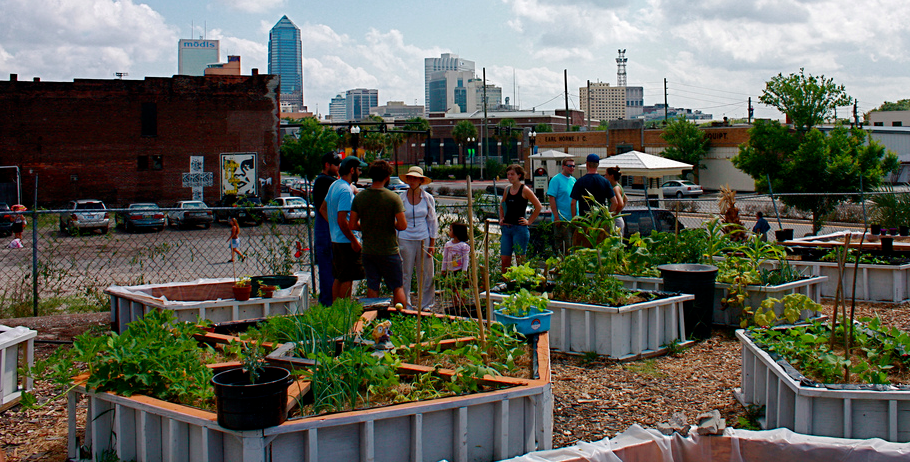
Community gardens are defined by the USDA [30] as "plots of land, usually in urban areas, that are rented by individuals or groups for private gardens or are for the benefit of the people caring for the garden." Community gardens can take on many forms, but the most common one consists of any number of individual beds (from a few to a hundred or more) that are tended by individuals or groups. Most community gardens are structured such that each bed is "rented" out for a nominal annual fee, and the renter manages their bed. Community gardens typically supply water and soil, and sometimes resources such as seeds and labor assistance. They are usually overseen by a manager, but they often host group events and expect individual gardeners to help out with tasks that benefit the whole garden community. These are most common in urban areas where residents do not possess adequate space to grow their own food but can be found in many other areas. They can be found all over the world. Most gardens have a set of rules governing them, such as the types of plants they can grow and what they can use in their beds (e.g., by only using organic growing methods).
Community gardens can also take the form of school gardens located on or near school property. They can be established in elementary, middle, high school, and college environments. The goals of school gardens usually include garden, food, and/or nutrition education, though many urban gardens provide this service as well. Therapy gardens are sometimes established so that they can be accessed by people with physical and/or mental issues, as gardening has therapeutic effects. Many gardens include initiatives to grow food to donate to local organizations such as food banks.
Research has shown that there are many benefits to community gardens, including but not limited to the following. (All links originally gathered from North Carolina State University Cooperative Extension [31]:
- Increased access to and intake of nutritional food. For example, this study in Denver, Colorado [32] found that: "Community gardeners consumed fruits and vegetables 5.7 times per day, compared with home gardeners (4.6 times per day) and nongardeners (3.9 times per day). Moreover, 56% of community gardeners met national recommendations to consume fruits and vegetables at least 5 times per day, compared with 37% of home gardeners and 25% of nongardeners."
- General social benefits. This study in Flint, Michigan found that: "Results suggest that the garden programs provided opportunities for constructive activities, contributions to the community, relationship and interpersonal skill development, informal social control, exploring cognitive and behavioral competence, and improved nutrition. Community gardens promoted developmental assets for involved youth while improving their access to and consumption of healthy foods."
- Community development. A study in New York City [33] found that "the opening of a community garden has a statistically significant positive impact on residential properties within 1000 feet of the garden, and that the impact increases over time. We find that gardens have the greatest impact in the most disadvantaged neighborhoods. Higher quality gardens have the greatest positive impact. Finally, we find that the opening of a garden is associated with other changes in the neighborhood, such as increasing rates of homeownership, and thus may be serving as catalysts for economic redevelopment of the community."
- Particular benefits for low-income communities. Another New York study [34] found that: "Gardens in low-income neighborhoods (46%) were four times as likely as non-low-income gardens to lead to other issues in the neighborhood being addressed; reportedly due to organizing facilitated through the community gardens." This is a very common finding of community garden research in low-income communities.
- Stress relief. A 2010 study [35] concluded that: "Gardening and reading each led to [reduction in stress signals], but decreases were significantly stronger in the gardening group. Positive mood was fully restored after gardening but further deteriorated during reading. These findings provide the first experimental evidence that gardening can promote relief from acute stress."
There are many more studies that demonstrate the benefits of community gardens. If you have ever participated in one, you would probably be able to list a few more! It is important to note that research shows that the benefits of community gardens are particularly pronounced in low-income areas, and thus are a recognized strategy to address equity and social justice (but also environment and economy!).


Fair Trade
You may have encountered Fair Trade goods such as coffee or chocolate when food shopping, or perhaps at a coffee shop. A fair trade good usually has a distinctive logo such as the one below. The purpose of fair trade certification is primarily to ensure that the workers throughout the supply chain were paid a fair wage. These certifications are affirmed by third-party certifiers that have no affiliation with the product at hand. They investigate the entire supply chain of the product and certify the product if it meets their standard.
One of the most common certifiers is Fair Trade Certified [38]TM (I cannot show their logo due to copyright.) They list [39] the following four standards that must be met in order to obtain certification:
- Income sustainability: ...Our standards ensure producers, workers, farmers, and fishermen have the money needed to invest in their lives and their work.
- Empowerment: Fair Trade empowers people to make choices for the good of themselves and their community, regardless of gender, status, position in society, or position on the globe. Rigorous standards give farmers, workers, and fishermen a voice in the workplace and the community.
- Individual and community well-being: ...Our model is fueled by committees of farmers, workers, and fishermen who decide how to invest the Fair Trade Premium based on their community's greatest needs: often clean water, education, and healthcare.
- Environmental stewardship: ...Our standards work to keep the planet healthy for generations to come by prohibiting the most harmful chemicals and taking measures to protect natural resources.
As you can see, fair trade can address issues beyond providing living wages. Generally speaking, it is better to buy fair trade certified goods than non-certified goods, but it is best to investigate individual certifiers to ascertain how legitimate they are.

Appropriate Technology
Merriam-Webster [40] provides a good definition of appropriate technology:
technology that is suitable to the social and economic conditions of the geographic area in which it is to be applied, is environmentally sound, and promotes self-sufficiency on the part of those using it.
The use of appropriate technology is a particularly important consideration when providing assistance to low income or otherwise marginalized communities. The idea behind appropriate technology is to make sure that any solutions proposed and/or aid provided is appropriate for the local conditions. These "conditions" can include local natural resources, but very often include local human capital, such as local knowledge, expertise, and physical capabilities. As indicated in the definition, it must promote self-sufficiency (which goes hand-in-hand with the first point).
For example, if a well-meaning organization travels to rural Mongolia or Peru to install a solar array and provide electricity, they must consider whether the locals that they are trying to help have the expertise to repair the system if it breaks down. Perhaps there is existing local expertise, or perhaps they need to be trained. Also, can they get replacement parts if they are needed? Are the solar arrays and components at risk for damage due to local wildlife or human populations? These are all questions that must be asked if self-sufficiency is to be addressed. One of the best ways to utilize appropriate technology is to work with the local populations to help them come up with solutions, instead of telling them what to do. Most likely they will have a wealth of knowledge to offer regarding the local conditions (they live there, after all!), but they likely also have experience trying to implement solutions.
The National Center for Appropriate Technology [41] in the U.S. provides a number of examples and explanations if you are so inclined. They work primarily with low-income populations in the U.S. to provide services such as energy assistance and sustainable, local food systems.
More Site Visits!
Here are some more site visits! Again, this is not required reading. I suggest browsing through them if/when you have time. This may help inspire your final project proposals!
- Sustainable Settings Farm [42], Carbondale
- Denver Urban Gardens [43], Denver
- Jackrabbit Hill Farm [44], Hotchkiss
- Jack's Solar Garden [45], Longmont
Summary and Final Tasks
Summary
By now you should be able to do all of the following:
- analyze the water footprint of various foods;
- describe how improper fertilizer management causes dead zones;
- define eutrophication;
- describe the sustainability implications of food deserts and food insecurity;
- demonstrate an understanding of permaculture philosophy and principles;
- describe regenerative agriculture and appropriate technology;
- analyze the sustainability impacts of community gardens;
- explain the benefits of fair trade certification.
Reminder - Complete all of the Lesson 9 tasks!
You have reached the end of Lesson 9! Double-check the to-do list on the Lesson 9 Overview page [46] to make sure you have completed all of the activities listed there before you begin Lesson 10.