Global Citizenship
Lesson Overview
Lesson Overview

As a World Campus student, and particularly as an ESP student, you are aware that we now live in a global society. Happenings across the globe have ripple effects like never before as the world continues to integrate and cross-cultural businesses and families become the norm. Everyone is affected as more and more people are "globetrotting" without ever leaving their homes; with the click of a mouse, the world is at their doorstep!
We'll be using a textbook (the free, electronic version) for this lesson, links to it can be found in throughout the lesson. In the book, Kibert et al. assert that “…social, cultural and business linkages through the Internet, computers, cell phones, and other media, transnational business operations that spread supply chains, workloads, and customers across multiple continents and growing cultural and political connections” have eliminated the option of functioning independently and in isolation in today’s world. (2012) Basically, the authors are saying that the days of operating within our own geographic and cultural boundaries are over.
In this lesson, we hope to lay the foundation for you to graduate as global stewards with the ability to function outside of your inherent native bubbles.
What will we learn?
By the end of this lesson you should be able to:
- explain “complex interdependence” and how it relates to energy and sustainability;
- recognize the cultural differences that exist and discuss how it shapes our families, communities, or business practices;
What will be due?
Refer to the Activities page for more information on the assignments for this lesson.
Questions?
If you have any questions, please post to the Canvas Discussion Forum called "Questions" or e-mail the instructor (if the question is personal in nature).
Global Citizenship
Global Citizenship
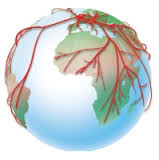
Report, 2021
What does it mean to be a global citizen? “A true global citizen possesses a wide view of the world and the part he or she plays in it.” (Alexander 2013) Like it or not, you are part of the first truly global generation of students. Being a part of the World Campus makes that even more true as you “sit” next to your classmates from all over the world every single semester.
In addition to the knowledge you’re gaining in the program, you’re also picking up skills. Analytical skills, critical thinking skills, and some lesser identified skills, like the ability to work in diverse teams, the ability to communicate to diverse audiences, and the confidence to work with people that don’t look or talk like you. All of these things are important in today’s global society.
As graduates of the ESP program, you will be faced with some of the biggest challenges ever encountered. Adequately addressing sustainable food, water, and energy needs with an ever-growing population and ever-shrinking resources is a daunting task. However, you are entering a time when we have insanely fast innovation taking place, the ability to communicate with partners across oceans in the blink of an eye, and the ability to be creative, ethical, and collaborative with those partners. Never before have more challenges existed, but, never before have there been more possibilities to creatively address those challenges.
The learning objective for the ESP competency titled “Global Perspective” encompasses more than knowing what other countries are doing to promote renewable energy. The purpose is far greater than that. We want you to be global citizens, and truly open your eyes to how the world works. Look outside the bubble you are living in. Whether it be a familial, political, geographical, religious, or other bubble, we want you to realize that differences exist and that is okay. It’s what makes things interesting! Like I tell my niece, “Different isn’t good or bad, it’s just different!”
As you work your way through the ESP program and into your careers, we hope that you practice open-mindedness to new people and situations. Global citizenship cannot be taught, it must be practiced. Practice seeing beyond your bubble. Encourage those around you to look beyond theirs.
Exploring Interdependence
Exploring Interdependence
Required Reading
Working Toward Sustainability: Ethical Decision Making in a Technological World [1], Chapter 4, section on "Exploring Interdependence" (p.75-76).
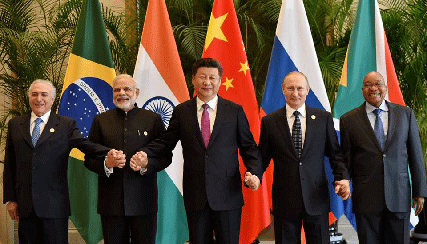
The required reading from the textbook on page 75-76 is short, and just scratches the surface of the "complex interdependence" theory. For more explanation and examination of the subject, read the following excerpts from the article "Theory of Complex Interdependence: A Comparative Analysis of Realist and Neoliberal Thoughts [4]" by Waheeda Rana included below.
In interdependence there are costly reciprocal effects of transaction among the actors. The policies and actions of one actor have profound impact on the policies and actions of the other actors and vice versa. Interdependence does not only mean peace and cooperation among actors, but a relationship between actors characterized by cooperation, dependence, and interaction in a number of different areas, and conflict as well.
Complex Interdependence is a theory which stresses the complex ways in which as a result of growing ties, the transnational actors become mutually dependent, vulnerable to each other’s actions and sensitive to each other’s needs. Complex Interdependence is defined as: “An economic transnationalist concept that assumes that states are not the only important actors, social welfare issues share center stage with security issues on the global agenda, and cooperation is as dominant a characteristic of international politics as conflict.” (Genest, 1996: 140)
...In the world of ‘Complex Interdependence’, despite the increasing economic cooperation and ecological interdependence, the possibility of international military conflicts cannot be ignored. However, unlike the traditional power politics, in ‘Complex Interdependence’ this may not be the zero-sum game. “The politics of economic and ecological interdependence involve competition even when large net benefits can be expected from cooperation.”(Keohane & Nye, 1977:10)
Robert O Keohane and Joseph S. Nye in their book ‘Power and Interdependence: World Politics in Transition’, described three main characteristics of Complex Interdependence: -
- Multiple Channels: In international politics there are multiple channels connecting the societies, including all the interstate, transgovernmental, and transnational transactions.
- Absence of Hierarchy Among Issues: In the world of Complex interdependence, there is no hierarchy among the issues. The dividing line between domestic and foreign policy becomes blurred and there is no clear agenda in interstate relations. There are multiple issues which are not arranged in a clear or consistent hierarchy. Among other things, “military security does not consistently dominate the agenda.”(Keohane& Nye, 1977:25)
- Minor Role of Military Force: As opposed to the central role that force is given in realist’s world, i.e. an ultimate necessity to guarantee survival, Complex Interdependence assumes that in international relations force is of low salience. When Complex Interdependence prevails, military force could be irrelevant in resolving disagreements on economic issues among members of an alliance, however simultaneously be very important for the alliance’s political and military relations with its rival bloc. According to Keohane and Nye, intense relationships of mutual influence may exist but force is no more considered an appropriate way of achieving other goals such as economic and ecological welfare which are becoming more important, because mostly the effects of military force are very costly and uncertain. (Keohane & Nye, 1977:28)
Excerpts from: Rana, Waheeda. "Theory of Complex Interdependence: A Comparative Analysis of Realist and Neoliberal Thoughts [4]." International Journal of Business and Social Science 6, no. 2 (2015).
Optional Reading
You might find it interesting to read the entire Rana article [4].
Think Globally, Act Locally?
Think Globally, Act Locally?
Required Reading
Working Toward Sustainability: Ethical Decision Making in a Technological World [1], Chapter 4, section on "Thinking Globally, Acting Locally" (p.76-78).
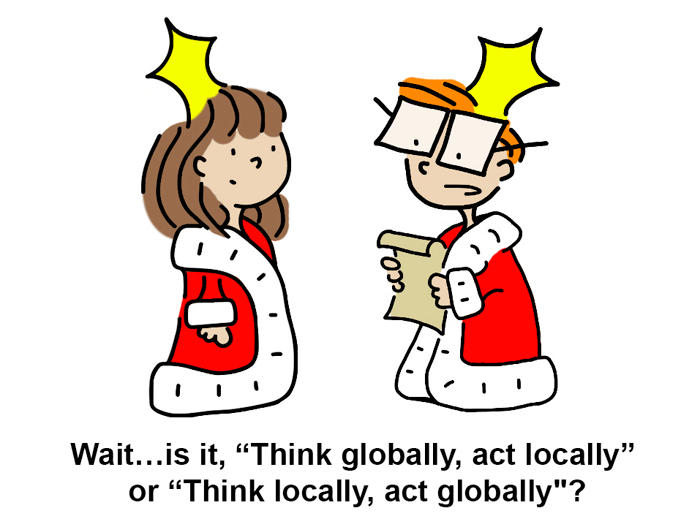
I'm sure you've heard the saying "Think globally, act locally!" but have you actually thought about what that means? The concept, originally used in the context of environment and sustainability, has now been widely customized for use when discussing brand proliferation in other countries. If you Google "Think globally, act locally" you will find a plethora of articles about how to customize products to be desired by those in a new geographic marketplace (e.g., the Chicken Maharaja Mac, the most popular McDonald's dish in India). When considering the original context, the use of the phrase "think globally, act locally" to promote consumables (especially mass-produced fast food) is nearly blasphemy!
Do you ever wonder if the efforts you make at home and in your local community make a difference when considering the big picture? Page 76 of our reading states that "...in order to pursue sustainability effectively, people must concern themselves first and foremost with the local communities in which they live and work." Alternatively, critics of localized efforts note that "Encouraging people to focus on local problems may lead them to ignore the larger contexts in which those problems have developed." (Kibert et al., 2012)
For many of us, the simple, home-based and regional efforts represent the most direct route to make a difference. It may be the only way we're able to be an activist for sustainability. If we're only able to participate by recycling, using mass transit, and eating less meat, does that make us insignificant in the fight against climate change? As the authors of our textbook state, "Ultimately, the pursuit of sustainability must always be Janus-faced [6], with one eye turned toward the local community and one eye turned toward the world community." (Kibert et al., 2012, 76-77)
Activities
Watch the following video in its entirety. It is 14 minutes and 28 seconds long. If the video isn't showing below, follow this link: https://youtu.be/XvjaIrYlkIg?si=BJjbF9mgLTzW26wW [7]
[Music]
Imagine you are the communications manager for Mercedes-Benz and you're getting this cool job. You can actually start introducing your brand in China. Now you know that luxury products from the West do very well in the whole of Asia, so you know you're going to be a success. But China's a bit of a weird place for you. It's different than what you're used to. So they pronounce "Benz" differently, and whenever you actually demonstrate what your cars are all about, they look at you weird. But hey, you don't understand the culture, so you really don't know what's going on. It will be okay.
And then after a while, you find out that the pronunciation of "Benz" is actually completely wrong. So the Chinese, the way they say B is wrong. They say—and I apologize to the Chinese amongst you because I don't speak Chinese, but I was helped with this—what they say is "bensi" which is actually "rush to the death." So you have a car in which you can rush to the death. Now you don't want to pay a lot of money for that, do you?
So you don't find that out as a foreigner, and when you do, at least it can be easily corrected. At least that is not too hard to do. But of course, it's already cost you millions of dollars because you need to change pronunciation in every ad campaign and everything differently. So it is easy to change. It is called—the translation is now, or the pronunciation now is "benchi," which is called "dashing speed." So that's much better for your car.
Now, Gerber, a brand of baby milk, actually didn't get the skyrocketing success they were waiting for in South America, and they didn't understand. And they started asking why, and then it turned out that parents didn't want to buy the baby milk for their children because "Gerber" in Spanish means "to vomit." This—it sounds so, so easy to not do, but it's actually hard to miss if you don't speak the language and you don't really get involved. And these are costly but small mistakes, and they're just the tip of the iceberg. There are many layers of cross-cultural problems and many layers of cross-cultural communication mistakes.
Now let's talk about feet. We are happy with feet, right? We are relaxed about feet. Feet can't really offend us, not here. But they can offend us—or they can offend people in Asia and in Arab cultures. Their feet are considered very unclean, and when they're unclean, that means that you can't show them. So if you show the soles of feet to Asians or to Arabs, they are very offended. You should actually not show them at all, not covered, not bare.
So my client, a financial service provider in Amsterdam, asked me to look into his cross-cultural communication that he was doing for his markets in Asia and in the Middle East. So he had a service. He said, "If you use this service, then you don't have to worry about—everything is okay." Now his enthusiastic web designer looked for a picture for the front page that would be actually very close to that feeling. So in all his happiness and enthusiasm, he showed me this.
So this is exactly what you shouldn't do. This is exactly what is the most offending thing that you can do in Asia and in Arab countries. Now, when I told the web designer, he had processed this through his own set of values. When I told him, he actually still wasn't impressed, and he thought, "Yeah, you know, people can actually be difficult about everything," and, "Well, you know, leave it there." And I said, "Well, there's no point to actually even start selling your product if this is what you put on your homepage."
So people filter this through their own ideas. People get confused also about what perceptions are in different areas of the world. Generally, we offend without knowing it. We make each other sometimes angry without knowing it between cultures. We don't want to offend. We don't want to make people angry, but we misinterpret. And once we do that, we actually start retracting, getting annoyed, getting into our own normal way of behaving, and we cannot communicate at all anymore.
Wouldn't it be fantastic if we would understand each other's perceptions, if we would understand what somebody else sees when they look at us, what somebody else feels when they look at us? When we do the simplest things, somebody else might be offended, and we don't know. Wouldn't it be great if we would know that? Because if we would know that, we would actually be able to connect to each other and not feel offended or feel disrespected or even fear each other.
Now, what is culture actually? Culture is actually a perception, the collective perceptions that people have with each other. It's like glue. It's like DNA within a group of people. So culture is determined by circumstances. Often it's determined by geography and history.
Now, if you have hot climates, people live outside. They live outdoors. So they trade in the streets. They work with each other in the streets. They meet, and they also spend their money outside of the house. When you have a cold climate, people stay inside, say in Scandinavian countries. It's cold and dark outside, so people stay inside, inside of their houses, inside of their rooms, and that's where they spent their money on also. It's not a coincidence that IKEA actually started in Scandinavia.
So the Dutch have actually also adjusted to their natural surroundings. We are a small country by the sea with a lot of neighbors, and these neighbors actually spoke other languages. So we learned many languages, and we're very known for this. People are very amazed that we speak so many languages, and that's because we wanted to trade. We had to protect ourselves against the water, so doing this, we actually learned how to protect land, to reclaim land, and now we are the best water managers in the world because of the challenges we've had. We've created some real business all over the world.
Have any of you ever looked outside of the window when you land at Schiphol Airport? Every single centimeter of our country is organized. And I have been with foreigners next to me in a plane, and they were just looking outside and going, "What? It's so organized!" We had to. That's how we survived. So this is what has become part of who we are.
Perceptions are actually something we are not aware of till we meet other people, till we meet other people that are different. It's like looking through yellow glasses all of your life. You don't know that you're looking through yellow glasses because there's nothing else. That's all you see. But actually, if everybody around you also has yellow glasses, that will be the end of it. The moment you meet somebody with pink glasses that look at the world in a different way, then it gets complicated because you don't know they're wearing pink glasses. They don't know that you're wearing yellow glasses. So actually, it's sometimes very hard to communicate unless you start understanding you have actually met somebody with other glasses. And this is how we start understanding other cultures: by meeting them, by starting to understand how they think.
When I went abroad, that was when I understood what it was to be a Dutch person. I didn't know how we thought. It was just normal. I never thought about it. But the moment I went outside of my country, I understood who we were, who we collectively are, and also what we—what others think about us and what others feel about us. I started understanding that. Wouldn't it be great if we could look through each other's glasses and see how somebody else sees the world and see how somebody else sees possibilities and success where we don't?
If you look at different perceptions, this is one that actually causes a lot of emotions. Here in Europe, we cannot not react to this picture. This is so intense for us because of our history. But I've seen a boy with this kind of shirts many times in Asia and in India. In India, this is the symbol of fertility. There's nothing wrong. Nobody understands in India that we think about Second World War when we see this.
When we are old in Europe or in the Netherlands or in the West, we lose youth. In the East and in Africa, we actually gain wisdom. There's a difference in perception.
Like the Dutch have actually been excelling in water management, there is a way of every culture to excel, and we have to find out what other cultures have become good in because of what they have gone through in their existence, what they've had to battle. So if you look at Asian and African nations, you will see that they have learned a lot of sustainability because of what happened in their lives, because of what happened in their existence. They had to face daily challenges that we didn't have to face or don't have to face anymore. So they have actually created creative muscles, and they actually know how to solve things that we don't know anymore.
If you look at Africa, people in Africa—most people in Africa—the first phone they ever used was the handphone. They never had the system of landlines. And we are all happy with our smartphones, right? But let's be honest, guys: they run out of power continuously. You have to update them continuously, and you have to buy a new one every two years. So are they so great?
The Africans have actually created a banking system with a simple telephone. They've actually created a lot of potential just by this small device. It's sustainable, it's practical. They use it as a radio. They use it as a flashlight, and they actually do it in a far smarter way than we do.
I am an adviser voluntarily to My Shining Star Foundation in Malaysia, and in this role, I actually work as the only Caucasian with Asians. I see that my team is flexible. I see that they are innovative, and they actually asked me to structure the organization. But they are doing all the fantastic work, and they solve all the problems in the end with the means they have, with the network they have. I am very inspired by the way they want to grow professionally and personally and spiritually, and I really learned from it as a Dutch person with a good education to understand how to solve problems in a different way.
So what I would like to say to end with is we actually are a fantastic group of amazing people. We all have different talents. We all have different gifts. We need to respect each other. We need to find out what each other's gifts are, and we need to start working and evolving together. It will take a bit of energy from all sides, but there is so much to gain. There is so much to work with, and we can grow and develop and find solutions we could never have found in one culture between cultures. So let's grow, let's evolve, let's be bright together.
[Music] [Applause]
Part 1
Answer the following questions with a minimum 150 word response (see further directions at the bottom of the page):
- Are you able to identify your cultural biases and what has influenced them?
- Do you spend time with people that have different life experiences than you? Provide an example of what you have learned from that person regarding their history, values, politics, communication styles, economy, or beliefs and practices.
- How do you plan to learn more about other cultures?
Part 2
Consider how you would rate yourself on the following areas listed in the table below. For each item in the first column, choose a rating (1, 2, 3, or 4) for yourself and provide a few sentences of why you feel the rating is appropriate. See further directions below the table. If it's hard to see the text on the table below, you can find it here: Link to Intercultural Fluency Table [8]

The Intercultural Fluency Table
Valuing, respecting, and learning from people with diverse backgrounds (e.g., ability, age, culture, economic status, educational level, ethnicity, gender, nationality, race, religion, sexual orientation). The individuals demonstrate, openness, inclusiveness, sensitivity, and the ability to interact respectfully with all people and understand individuals' differences (www.wcupa.edu [9])
| Level 1 | Level 2 | Level 3 | Level 4 | |
|---|---|---|---|---|
| Knowledge: Cultural Self-awareness |
Minimal awareness of own cultural rules and biases (even those shared with own cultural group(s)) (e.g. uncomfortable with identifying possible cultural differences with others.) | Identified own cultural rules and biases (e.g. with a strong preference for those rules shared with own cultural group and seeks the same in others.) | Recofnizes new perspectives about ouwn cultural rules and biases (e.g. not looking for sameness; comfortable with the complexities that new perspectives offer.) | Articulates insights into own cultural rules and biases (e.g. seeking complexity; aware of how own experiences have shaped these rules, and how to recognize and respond to cultural biases, resulting in a shift in self-description.) |
| Knowledge: knowledge of cultural worldview frameworks |
Demonstrates surface understanding of the complexity of elements important to members of another culture in relation to its history, values, politics, communication styles, economy, or beliefs, and practices. | Demonstrates partial understanding of the complexity of elements important to members of another culture in relation to its history, values, politics, communication styles, economy, or beliefs and practices. | Demonstrates adequate understanding of the complexity of elements important to members of another culture in relation to it's history, values, policies, communication styles, economy, or beliefs and practices. | Demonstrates sophisticated understanding of the complexity of elements important to members of another culture in relation to its history, values, politics, communication styles, economy, or beliefs and practices. |
| Skills: Empathy |
View the experience of others but does so through own cultural worldview. | Identifies components of other cultural perspectives but responds in all situations with own worldview. | Recognizes intellectual and emotional dimensions of more than one worldview and sometimes uses more than one worldview in interactions. | Interprets intercultural experiences from the perspectives of own and more than one worldview and demonstrates ability to act in a supportive manner that recognizes the feelings of another cultural group. |
| Skills: Verbal and nonverbal communication |
Minimal level of understanding of cultural differences in verbal and nonverbal communication; is unable to negotiate a shared understanding. | Identified some cultural differences in verbal and nonverbal communication and is aware that misunderstandings can occur based on those differences but is still unable to negotiate a shared understanding. | Recognizes and participates in cultural differences in verbal and nonverbal communication and begins to negotiate a shared understanding based on those differences. | Articulates a complex understanding of cultural differences in verbal and nonverbal communication (e.g., demonstrates understanding of the degree to which people use physical contact while communicating in different cultures or use direct/indirect and explicit/impolicit meanings) and is able to skillfully negotiate a shared understanding based on those differences. |
| Attitudes: Curiosity |
Minimal interest in learning more about other cultures. | Asks simple or surface questions about other cultures. | Asks deeper questions about other cutlrues and seeks out answers to these questions. | Asks complex questions about other cultures, seeks out and articultes answers to these questions that reflect multiple cultural perspectives. |
| Attitudes: Openness |
Receptive to interacting with culturally different others. Has difficulty suspending any judgment in interactions with culturally different others, but is unaware of own judgment. | Expresses openness to most, if not all interactions with culturally different others. Has difficulty suspending any judgment in interactions with culturally different others, and is aware of own judgment and expresses a willingness to change. | Begins to initiate and develop interactions with culturally different others. Begins to suspend judgement in valuing interactions with culturally different others. | Initiaties and develops interactions with culturally different others. Suspends judgement in valuing interactions with culturally different others. |
Format your assignment submission as follows:
Part 1
List the first question above, provide the 150 word minimum response.
List the second question above, provide the 150 word minimum response.
List the third question above, provide the 150 word minimum response.
Part 2
List the header of the first row in the table (e.g. Cultural Self Awareness) then the rating (e.g. 2) then provide 1-4 sentences of why you've rated yourself at that level.
So on and so forth, for all 6 rows of the table.
An example for Part 2:
Cultural Self-Awareness = 2. I grew up in Central Pennsylvania on a diary farm with 4-H friends and family. I wasn't exposed to anyone "different" than me, meaning there was no diversity as it relates to ethnicity, culture, race, religion, sexual orientation. My cultural rules were never "challenged" meaning, there were no alternatives introduced to me until I was at college. Even now, although I've been acclimated to other ways of life, and now understand that you cannot assume you know anything about any person based on looks and limited knowledge, I still occasionally catch myself (embarrassingly), entering a conversation with someone new with pre-conceived ideas of "who" they may be.
Submit as a word document to the dropbox for Lesson 12.
Summary
Summary
We discussed a lot of different ideas related to global perspective in this lesson. Our history as a melting pot has influenced the way we do things in our work and home lives - more than we even realize. Our future as a global participant will continue to promote this trend, and we will see more and more "outside" influences in every aspect of our day-to-day lives. Being a global citizen and understanding the interdependency that exists is only part of the picture. Kenneth Boulding, in his last speech to the UN in 1965, referred to the idea of "Spaceship Earth" and stated:
We travel together, passengers on a little spaceship, dependent upon its vulnerable reserve of air and soil; all committed for our safety to its security and peace; preserved from annihilation by the care, the work, and I will say, the love we give our fragile craft. (Kibert 2012)
References
References
Kibert, Charles. Working Toward Sustainability: Ethical Decision Making in a Technological World. Hoboken. Wiley. 2012.
Rana, Waheeda. "Theory of Complex Interdependence: A Comparative Analysis of Realist and Neoliberal Thoughts." International Journal of Business and Social Science 6, no. 2 (2015).
Alexander, Drew. 2014. "Beyond Borders: What It Means to Be a Global Citizen. [10]" The Huffington Post, February 19. Accessed August 20, 2016.
Johnson, Matthew. 2014. "Polish Wedding Traditions and the Meanings Behind Them. [11]" June 17. Accessed July 12.
PACT. 2011. "The Polish Wedding." November 16. Accessed July 12.